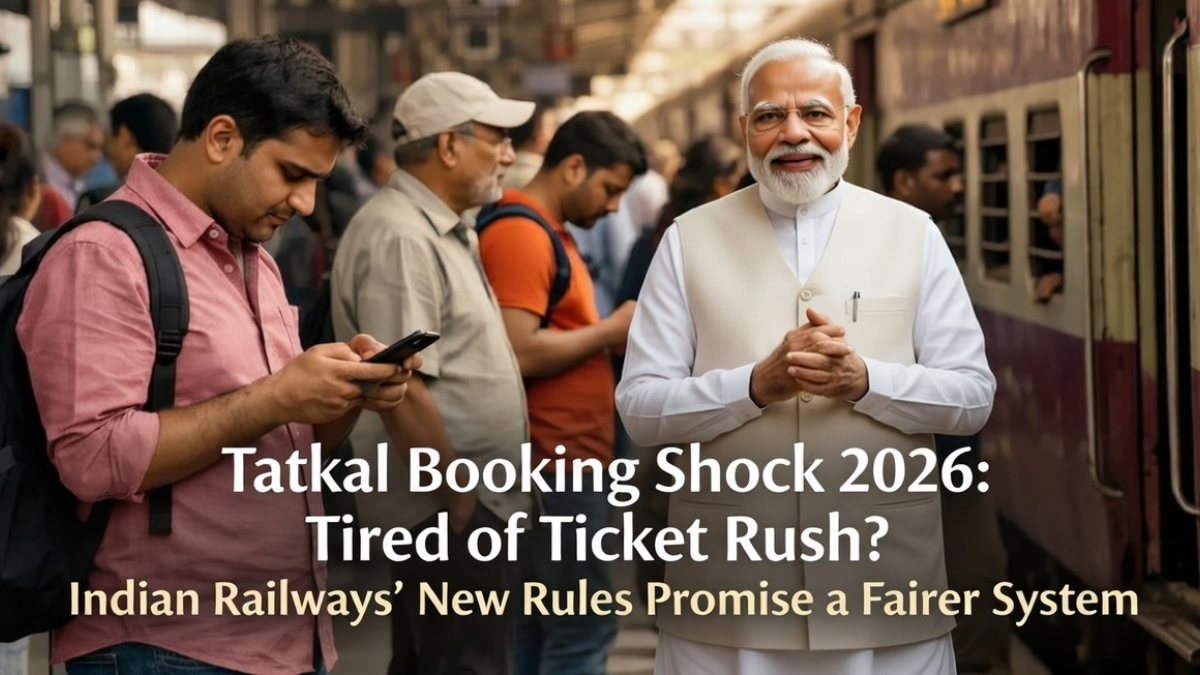
Tatkal booking has long been a stressful experience for railway passengers across India. Within seconds of the booking window opening, tickets often get sold out, leaving genuine travelers frustrated. In 2026, growing complaints about bots, agents, and unfair booking advantages have pushed Indian Railways to introduce new Tatkal booking rules aimed at reducing chaos and improving transparency.
For passengers who rely on last minute travel, these changes could significantly reshape the booking experience. But what exactly is changing, and will it truly end the race against time every morning?
Why Tatkal Booking Became So Competitive
Tatkal tickets are designed for emergency or urgent travel. However, high demand combined with limited quota has made the system extremely competitive. Popular routes often see tickets disappear within minutes.
Many passengers have alleged that automated tools and booking agents manage to secure large numbers of tickets faster than regular users. This perception of unfair access has damaged trust in the system.
As online bookings dominate railway reservations, ensuring fairness has become a priority for Indian Railways in 2026.
What the New Tatkal Rules in 2026 Aim to Fix
The updated framework focuses on improving transparency and restricting misuse. While specific implementation details may vary across zones and platforms, the intent is clear.
The new approach is expected to strengthen verification systems, reduce automated bulk bookings, and ensure that individual passengers get equal opportunity at the time of booking.
Enhanced digital monitoring and stricter login authentication processes are part of the broader strategy to create a level playing field.
Key Changes Being Discussed
• Stronger OTP based user authentication before payment confirmation, stricter monitoring of multiple bookings from the same IP address, enhanced captcha or verification steps during peak booking time, limitations on agent bookings during initial Tatkal window, and faster refund processing for cancelled Tatkal tickets under specific conditions.
These changes are designed to slow down automated systems while keeping the process manageable for genuine travelers.
Impact on Common Passengers
For regular users booking through official railway platforms, the experience may become slightly more structured. Additional verification steps could add a few seconds to the process, but they are intended to prevent unfair bulk bookings.
Passengers may notice improved availability in the first few minutes of booking if misuse is effectively controlled. However, demand on busy routes will likely remain high.
The overall goal is not to increase ticket supply but to distribute access more fairly.
Will Tatkal Tickets Be Easier to Get in 2026
This is the biggest question among travelers. While new rules can reduce manipulation, the limited Tatkal quota means competition will still exist.
What may change is the speed at which tickets get exhausted. If automated bookings are curbed, individual users may experience slightly better chances of securing seats.
Still, planning ahead whenever possible remains the safest strategy.
Digital Monitoring and Technology Upgrade
Indian Railways has been investing heavily in digital infrastructure. Advanced analytics tools are expected to identify unusual booking patterns in real time.
The upgraded system may automatically flag suspicious accounts, block high frequency attempts, and ensure smoother server performance during peak booking hours.
Such technological upgrades are essential to handle millions of users attempting to book simultaneously.
Guidelines for Passengers Booking Tatkal in 2026
To improve your chances under the new system, preparation is key. Keep passenger details saved in advance, ensure stable internet connectivity, log in a few minutes before the booking window opens, and keep payment methods ready.
Avoid relying on unofficial third party tools or shortcuts, as stricter digital scrutiny could lead to booking failures or account restrictions.
Understanding the new process can help reduce stress during the booking rush.
How Agents and Travel Operators Are Affected
Travel agents who rely on Tatkal bookings for clients may face tighter restrictions. Limiting agent access during the first few minutes of booking could prioritize individual users.
This shift signals a move toward empowering direct passengers rather than intermediaries.
However, official travel agencies will continue to operate within regulated guidelines.
Broader Impact on Railway Ticketing System
The 2026 Tatkal reforms reflect a broader attempt to modernize railway ticketing in India. With increasing digital adoption, transparency and fairness are becoming central to policy updates.
Improving user trust in the booking system is as important as expanding train capacity. If passengers feel the process is fair, overall satisfaction with railway services may improve significantly.
The real success of these reforms will depend on effective enforcement and consistent monitoring.
Conclusion
Tatkal booking chaos has long frustrated Indian Railways passengers. The new 2026 rules aim to reduce misuse, strengthen digital safeguards, and create a more balanced booking experience.
While competition for tickets may not disappear entirely, fairer access and improved monitoring could make the system less stressful for genuine travelers. Staying informed and prepared will remain the smartest approach for securing Tatkal tickets in the coming months.
Disclaimer: Tatkal booking rules and procedures are subject to official notifications by Indian Railways. Passengers should verify updated guidelines through authorized railway platforms before booking.